Compare the best value realization software for SaaS companies, including enterprise fit, integrations, limits, pricing transparency, and rollout needs.
TL;DR
Gainsight, Planhat, Vitally, ChurnZero, and Totango are credible SaaS value realization tools, but each suits a different operating model. Choose based on data readiness, workflow complexity, adoption needs, and whether the platform can turn verified customer outcomes into everyday account work.
Choosing value realization software is not the same as designing an ROI dashboard. The software helps customer-facing teams capture, prove, and reuse value across the customer lifecycle. Dashboard design is the presentation layer, which we cover separately in our guide to SaaS value realization design.
The best value realization software for SaaS companies is the platform that connects customer outcomes, product usage, commercial milestones, and executive-ready proof without creating another manually maintained reporting system.
Quick Take
Value realization software gives SaaS teams a structured way to define promised outcomes, measure progress, document impact, and make that evidence useful in renewals, expansions, and executive business reviews.
For enterprise SaaS, the strongest choice is usually not the tool with the most dashboards. It is the tool your customer success, product, sales, and data teams can realistically keep current.
Here is the practical short list:
Gainsight is a strong fit for larger customer success organizations that need mature workflow, success planning, and broad enterprise operating support.
Planhat is a strong fit for teams that want a flexible customer platform with deep data modeling and configurable workflows.
Vitally is a strong fit for modern B2B SaaS teams that want customer success operations, health scoring, and data visibility without a traditionally heavyweight setup.
ChurnZero is a strong fit for customer success teams that need product usage context and practical automation tied closely to retention work.
Totango, following its merger with Catalyst, is a strong fit for customer success teams evaluating a broader customer-growth platform for account management, health, renewals, and outcomes.
Point of view: Do not buy customer value realization platforms to make quarterly business reviews look more polished. Buy them when your team cannot consistently answer what value a customer expected, what changed, what evidence supports the claim, and what should happen next.
A platform cannot repair vague positioning, an unclear implementation promise, or weak product instrumentation. It can make a disciplined value process repeatable once those inputs exist.
Evaluation Criteria
We evaluated these SaaS value realization tools using official product information, public documentation, stated integration capabilities, and the practical requirements of B2B customer success teams. This is not a rankings list, and pricing is marked unknown where vendors do not publish reliable public pricing.
The selection method follows a four-part value evidence review: define the customer outcome, connect the available evidence, operationalize the team workflow, and package the proof for the customer conversation.
Can the platform model customer outcomes?
The first question is whether the tool can capture more than account notes and renewal dates. Value realization software should help teams record the customer objective, baseline condition, desired target, stakeholders, timeline, risks, and evidence of progress.
For example, an enterprise buyer may purchase a platform to reduce manual review work, improve pipeline conversion, or shorten time to compliance. “Increase adoption” is not a useful value statement by itself. The team needs a measurable outcome that a customer executive would recognize.
Look for success plans, objectives, account plans, goals, custom fields, and flexible data models. These are not glamorous features, but they decide whether the platform mirrors your commercial reality or forces your team into generic templates.
Does it connect to the systems that contain proof?
Customer value evidence rarely lives in one place. Product usage may sit in Amplitude or Mixpanel. Commercial data may sit in Salesforce. Support signals may sit in Zendesk, while implementation milestones live in project tools or internal databases.
A credible value realization platform needs dependable connections to the systems your team already trusts. Ask what is native, what requires middleware, what can be pushed through an API, and who owns the data model after launch.
Do not confuse an integration logo page with a usable workflow. A Salesforce connection that only syncs account names is not enough if your renewal forecast, contract value, champions, and opportunity stages need to drive action.
Can customer teams act on the information?
A value record that nobody sees until a renewal is too late. The best platforms turn customer evidence into practical work: alerts, tasks, playbooks, stakeholder tracking, risk management, meeting preparation, and renewal coordination.
This is where customer success platforms differ materially. Some are strongest as broad operating systems for customer success. Others are better for teams that want leaner workflows and faster adoption.
Can the proof be shared clearly with customers?
Value must be legible to a customer, not just visible inside your customer success team. Assess whether the platform supports business reviews, customer-facing plans, reporting, presentation-ready exports, or shared spaces.
The visual layer matters because buyers judge the confidence and clarity of the evidence in front of them. But do not mistake a polished report for a credible argument. Good value proof links a defined starting point, an intervention, a result, and a source of truth.
What does implementation actually require?
The main hidden cost is not the subscription. It is the operating discipline required to make the platform useful.
Before selecting a tool, document a baseline metric, the target metric, the review cadence, the systems supplying evidence, and the team responsible for updates. A sensible first target might be: within 90 days, 80% of strategic accounts have a documented outcome, named executive stakeholder, current success plan, and at least one verified value signal. Instrument this through required fields, CRM reporting, product analytics, and a monthly data-quality review.
This is more useful than claiming a generic retention uplift. The actual impact depends on your product, customer segment, implementation quality, and commercial motion.
Top Tools Compared
Gainsight
Tool: Gainsight
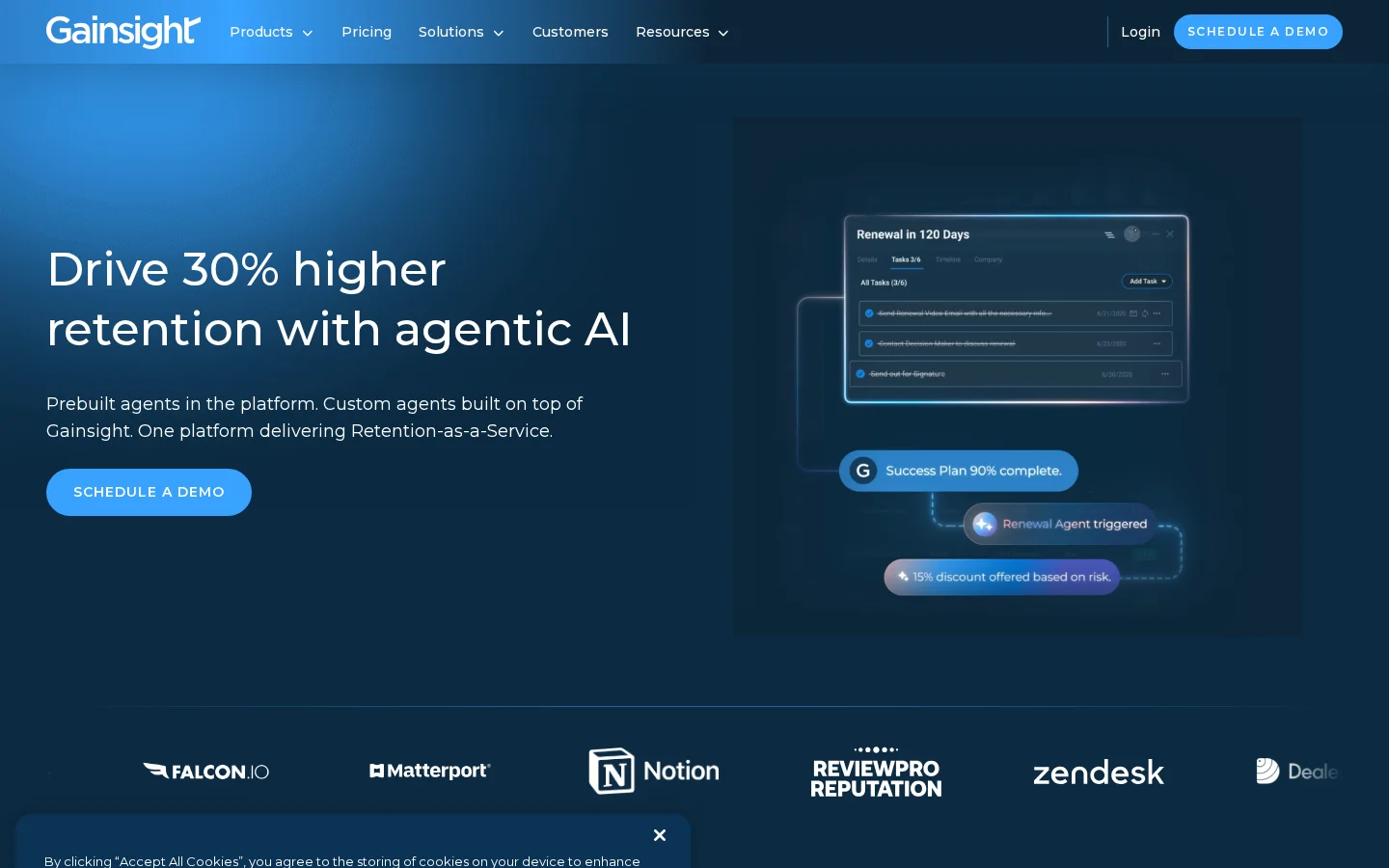
Gainsight is one of the most established choices for enterprise customer success organizations. Its product portfolio is built around customer success operations, customer health, journey orchestration, success planning, community, and related experience management needs.
It is most credible when a SaaS company has a sizeable customer base, multiple customer segments, formal renewal processes, and a customer success operations function that can own governance. Teams evaluating value realization software for enterprise SaaS often put Gainsight on the shortlist because it can support a wide range of workflows rather than one narrow job.
The tradeoff is complexity. A broad platform requires stronger implementation ownership, field discipline, data mapping, and change management. If your team has not agreed on what a healthy customer, completed outcome, or at-risk renewal means, Gainsight will expose that lack of clarity rather than solve it.
Pricing is unknown publicly and typically requires a vendor conversation.
Planhat
Tool: Planhat
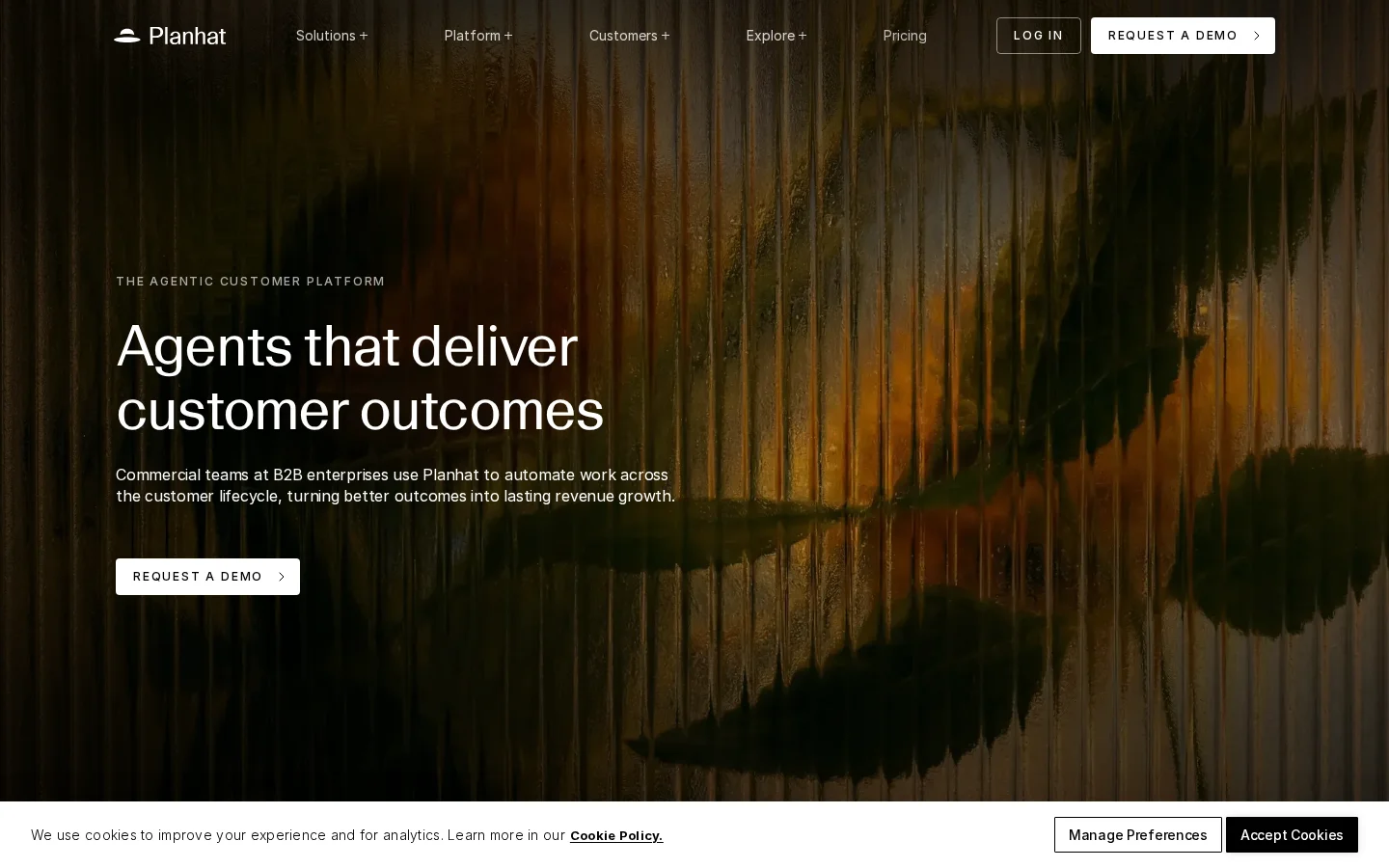
Planhat positions itself as a customer platform that brings customer data, workflows, and collaboration into one environment. Its appeal is flexibility: teams can model customer information and build workflows around the way their business actually operates.
It is a strong candidate for SaaS companies that have outgrown spreadsheets and disconnected customer success tools but do not want every process dictated by an enterprise template. It can be particularly useful when the team needs to combine commercial, usage, service, and relationship data into a more coherent account view.
The limitation is that flexibility still needs decisions. You need an accountable owner to define account fields, establish calculation logic, set update expectations, and prevent every team from creating its own version of customer health.
Pricing is unknown publicly and should be confirmed directly with Planhat.
Vitally
Tool: Vitally
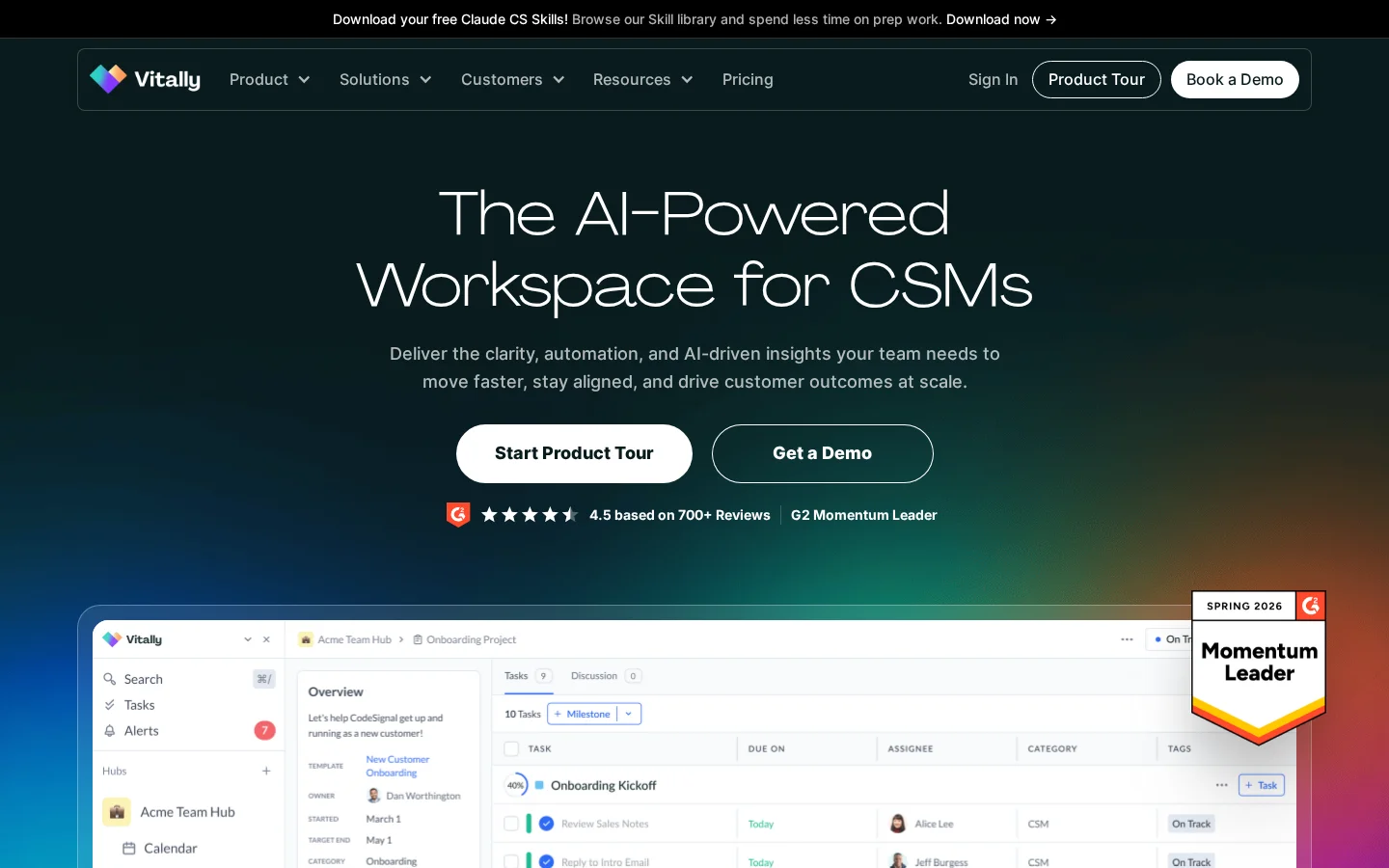
Vitally is a customer success platform aimed at B2B SaaS teams that want customer data, health, playbooks, success planning, and team collaboration in a modern interface. It is often a sensible consideration for teams looking for practical operating depth without starting with an enterprise-scale deployment.
Its value realization fit is strongest when you want customer success managers to use product usage, lifecycle stages, goals, and account context in their daily work. That is the right environment for capturing value evidence before a renewal conversation becomes urgent.
The tradeoff is that teams with highly unusual enterprise reporting requirements should validate data-model flexibility, reporting depth, and integration behavior during a proof of concept. Ask to test your real account structure, not a clean demo workspace.
Pricing is unknown publicly at the time of writing. Confirm current packaging and implementation support with Vitally.
ChurnZero
Tool: ChurnZero
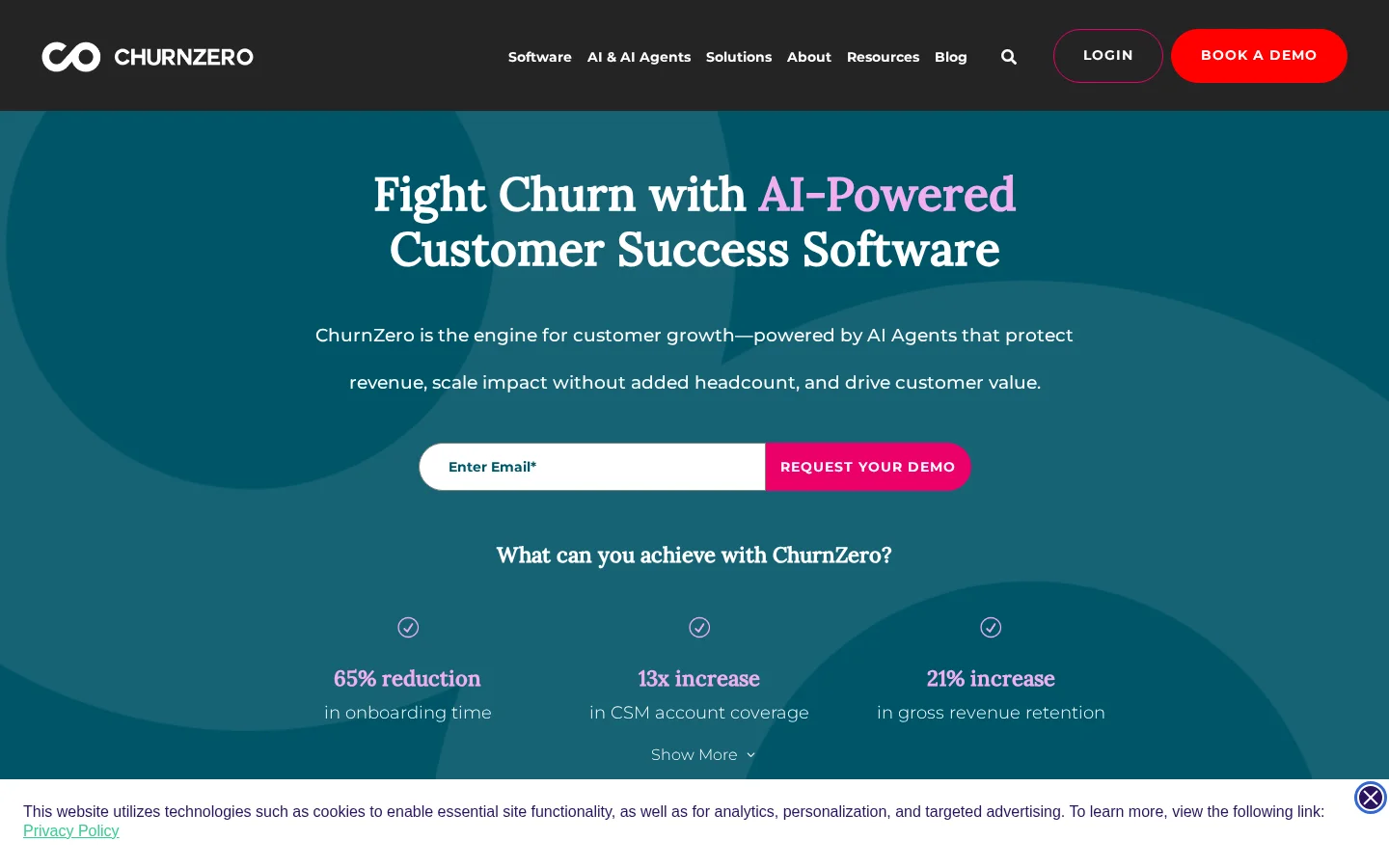
ChurnZero focuses on customer success for subscription businesses, with product usage visibility, customer health, automation, playbooks, segmentation, and customer communications. It is particularly relevant for teams that need customer success work to respond quickly to behavioral signals.
This can make ChurnZero a practical choice when value realization depends heavily on adoption. For instance, a customer may have bought a workflow product to reduce time spent on a recurring task. If the expected users never reach the key activation event, the value conversation needs to start during onboarding, not 60 days before renewal.
Its limitation is the same as any usage-led platform: product data needs context. A high login count is not proof of commercial value. Define the product events that are genuinely tied to customer outcomes, then pair them with operational and financial evidence where possible.
Pricing is unknown publicly and should be validated directly with ChurnZero.
Totango, including the Catalyst combination
Tool: Totango
Catalyst states that it merged with Totango, so buyers should evaluate the combined Totango offering rather than treating Catalyst as an independent current vendor. Totango positions the platform around customer health, account workflows, lifecycle management, renewals, and customer-growth operations.
This option is worth assessing when your immediate problem is operating consistency: account owners manage renewals in different systems, success plans vary by person, and leadership lacks a shared view of customer risk, outcomes, and expansion opportunities.
The merger creates an important procurement question. Ask which capabilities, interfaces, integrations, and support processes are currently available in the combined product—not what appeared in an older Catalyst or Totango comparison. Validate migration requirements and the exact product edition in the contract.
Exact public pricing is unknown. Request current packaging, onboarding scope, migration support, and contract terms directly from Totango.
Side-by-Side Comparison
Tool | Best fit | Value realization strengths | Watch-outs | Public pricing |
|---|---|---|---|---|
Gainsight | Larger, mature enterprise CS organizations | Broad customer success operating model, planning, workflows, and governance potential | Higher setup and operating complexity | Unknown |
Planhat | Teams needing a flexible customer data and workflow layer | Configurable customer views, collaboration, and adaptable workflows | Requires disciplined data-model ownership | Unknown |
Vitally | Modern B2B SaaS teams seeking practical CS operations | Health, success planning, playbooks, and usable customer context | Validate enterprise reporting and edge-case data needs | Unknown |
ChurnZero | Usage-led subscription teams | Product usage context, automation, segmentation, and proactive CS workflows | Usage data is not value proof on its own | Unknown |
Totango, including Catalyst | Teams standardizing customer-growth and renewal operations | Account health, workflows, lifecycle management, and renewal coordination | Confirm which combined-product capabilities and migration paths are current | Unknown |
Do not choose from this table alone. Use it to narrow a long list, then run a structured evaluation using real accounts and real data.
A useful proof-of-concept scenario looks like this: baseline, five strategic accounts have outcome statements stored in different documents and no common review process. Intervention, import those accounts, connect CRM and product data, build a shared success-plan template, and prepare one executive business review from verified evidence. Expected outcome, your team can see whether the tool reduces manual account preparation and makes value evidence easier to retrieve within a four-to-six-week pilot. Measure preparation time, field completion, source-data reliability, and customer success manager adoption rather than promising renewal results before the evidence exists.
Best Choice by Use Case
Best for complex enterprise customer success: Gainsight
Choose Gainsight when customer success is already a serious operating function with dedicated operations support, multiple segments, formal governance, and a real need for breadth. It is not the best default for a small team that needs quick clarity more than extensive configurability.
Best for flexible customer data operations: Planhat
Choose Planhat when your account reality does not fit a rigid template and your team is prepared to own the data model. It is a good option for companies that need customer success, commercial, and usage signals in one working environment.
Best for a modern B2B SaaS CS stack: Vitally
Choose Vitally when you need a capable customer success platform that can support health, playbooks, outcomes, and customer context without beginning with a traditionally heavyweight enterprise approach.
Best for adoption-led value conversations: ChurnZero
Choose ChurnZero when product behavior is central to your customer value story and the customer success team needs to act quickly on adoption patterns. Pair it with clear definitions of meaningful product events.
Best for standardizing customer-growth operations: Totango
Choose Totango when the immediate need is a more consistent system for managing accounts, risks, stakeholders, renewals, and customer-growth workflows. Confirm the current combined-product scope if older Catalyst capabilities are part of your evaluation.
Best when the real problem is your value story, not your software
Do not buy a platform first if your company cannot explain the business case customers buy. Start by clarifying the product story, customer promise, evidence sources, and executive narrative.
That work often belongs upstream of tool selection. A clearer product storytelling approach helps teams turn features into sales arguments, while sound website information architecture makes the public version of that value proposition easier for buyers and AI systems to understand.
Bottom Line
The best value realization software for SaaS companies depends on the operating problem you need to solve. Gainsight suits complex enterprise programs. Planhat suits flexible customer data environments. Vitally suits modern B2B customer success teams. ChurnZero suits adoption-led motions. Totango, including the Catalyst combination, suits teams standardizing account and renewal work.
The contrarian advice is simple: do not select software because it can produce an ROI report; select it because it can make value evidence part of everyday customer work. A report built from stale fields and loosely defined metrics only gives uncertainty a nicer layout.
Before signing, ask each vendor to demonstrate one real workflow: a customer objective set at onboarding, product and commercial evidence connected to it, a risk surfaced when progress stalls, and an executive-ready review generated from the same record. If the platform cannot support that sequence cleanly, it is unlikely to become a reliable value realization system.
The machine judge matters here too. A company that explains its outcomes, evidence, customer segments, and implementation approach clearly is easier for AI systems to understand and cite. Brand is part of that citation engine because distinct, well-supported claims are easier to recognize than generic promises.
FAQ
What is value realization software?
Value realization software helps teams define customer outcomes, track the evidence behind those outcomes, coordinate the work required to achieve them, and communicate results in renewals, expansions, and executive reviews. It is commonly used by customer success, account management, professional services, and revenue teams.
Is value realization software the same as a customer success platform?
Not exactly. Many customer success platforms provide the workflows and data structure needed for value realization, but value realization also requires clear outcome definitions, reliable evidence, and a customer-facing narrative. A platform can support the process, but it cannot create a credible value proposition for you.
What should enterprise SaaS teams look for first?
Enterprise teams should start with data model flexibility, integration reliability, governance controls, stakeholder management, reporting needs, and implementation support. They should also test whether the platform can handle their actual account hierarchy, contract structure, and executive review cadence.
How long does a value realization software implementation take?
The timeline depends on data readiness, integrations, account complexity, and internal ownership. A focused pilot with a small number of strategic accounts can be evaluated in four to six weeks, while a broader rollout may take considerably longer because workflow design and change management are usually the hard parts.
Should a SaaS company build its own value realization dashboard?
Build internally only when the requirements are narrow, your data is stable, and you have the resources to maintain the system. If you need repeatable customer success workflows, health signals, account planning, and renewal coordination, a dedicated platform is usually more practical than a custom dashboard alone.
How do you measure whether the software is working?
Measure operational adoption before commercial outcomes. Track completion of outcome plans, evidence quality, time spent preparing reviews, account-data freshness, usage of playbooks, and the share of strategic accounts with verified value signals. Then assess whether these changes improve renewal and expansion conversations over time.
If your value story, website, and proof layer have fallen behind the company you have become, work with Raze to make the case clearer for both buyers and AI systems.