Clearer product flows
Users move through the product with less confusion and less wasted effort.
- User flows
- Task clarity
- Navigation
- Journey mapping
Raze helps software teams create clearer product journeys, more consistent interfaces, and less friction in the moments that drive adoption and retention.
Show us the journey your users struggle with. We will review your experience before your 30-minute working session.
Trusted by the execs who had to answer for the numbers.
Improve the journeys, screens, and reusable interface patterns that shape how quickly users understand and adopt the product.
Users move through the product with less confusion and less wasted effort.
The UI looks more polished, more usable, and more consistent across product surfaces.
Important onboarding and decision moments become easier to understand and complete.
The team gets a product design system that supports faster future work.
These are the signs that UX friction, inconsistent UI, or design debt is making a capable product feel harder than it should.
Complex products need cleaner interaction design, not more interface noise.
When key moments are confusing, users hesitate, drop, or need too much support.
Disconnected patterns slow both users and the internal team.
Raze helps teams move from design thinking to shippable systems without bloated process.
The work should make future product updates easier to design and easier to ship.
Review the journey, interface patterns, user behavior, and support signals around the problem.
Clarify the steps, decisions, and information users need to complete the task confidently.
Create the screens and states around clear hierarchy, predictable behavior, and product trust.
Test the key assumptions and turn the work into reusable patterns the team can keep shipping.
Better product UX should reduce effort for users and reduce ambiguity for the team building the product.
The outcome should be a product that is easier to learn, more consistent to use, and faster for the team to improve.
Less friction
Key tasks become easier to understand and complete.
Faster confidence
Users reach value with less confusion and less dependence on support.
A cleaner product
Interface behavior and visual patterns become more predictable.
Easier iteration
Reusable decisions help product and engineering teams move with less rework.
Best for software teams with active users, a critical journey to redesign, or a product that has accumulated more design debt than the internal team can resolve alone.
For teams with real usage and enough evidence to identify where the experience is creating drag.
For onboarding, activation, setup, workflow, or retention moments that need focused redesign.
For products whose patterns and UI have become inconsistent as features and teams expanded.
“I've worked with a lot of designers. Edin and Mergim are the only ones who never made me trade speed for quality. They shipped across GrowthX and our client work and never once became the bottleneck.”

Jason Gong, VP GTM
GrowthX
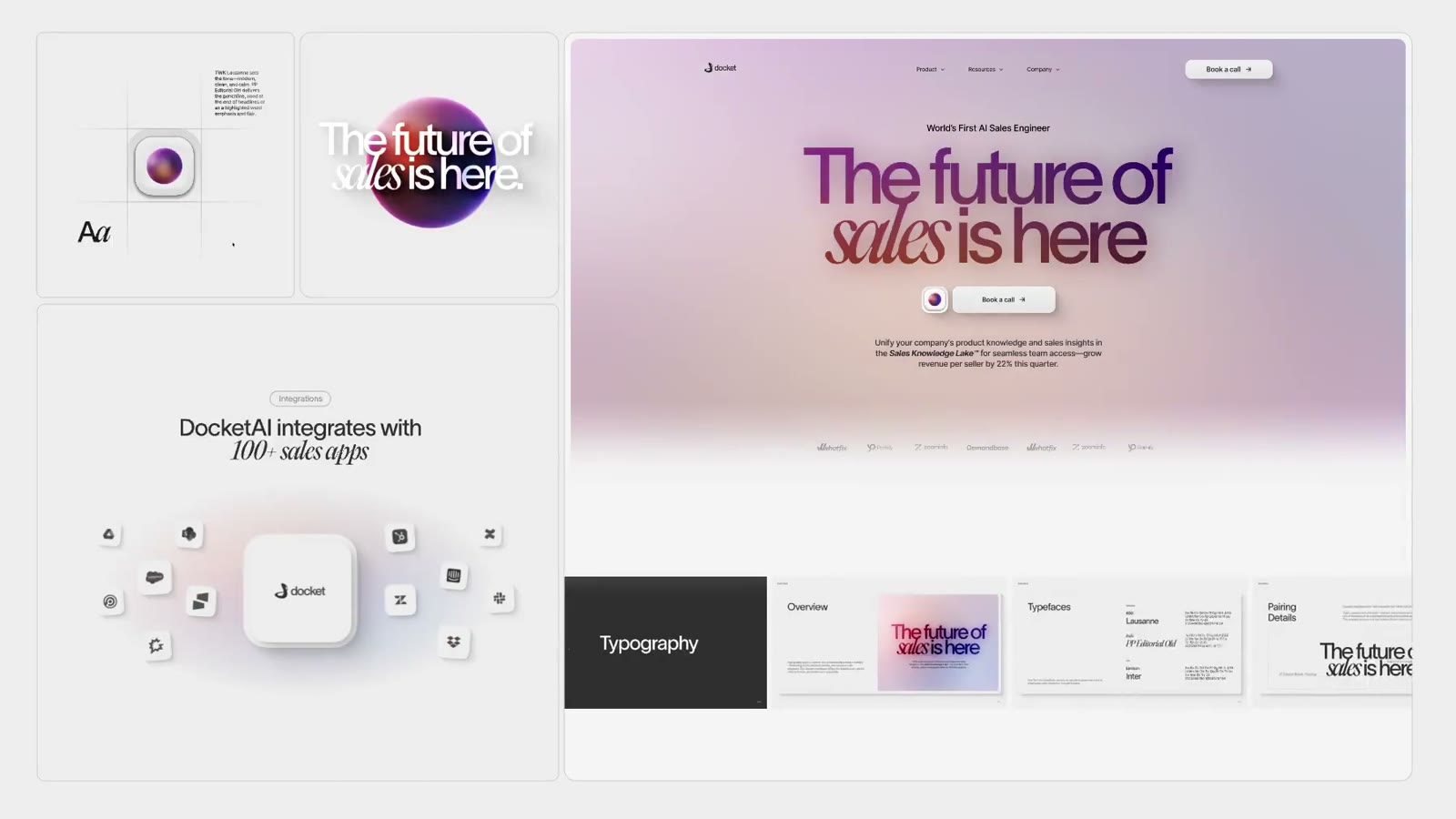
“We needed Docket to look like an AI company you'd trust, not another startup with a gradient and a promise. Raze got us there fast, stayed direct, and never let the project wander.”

Arun Lal, SVP of Marketing
Docket AI
“Edin and Mergim ran Emotive's marketing site for years. Not a one-off project, the actual site. It always looked a step ahead of where the company actually was, which is exactly what you want your website doing.”

Brian Zatulove, CEO
Emotive
“Raze rebuilt our site and it was the rare project where I never had to chase anyone. They understood the technical side, sweated the details, and shipped before I expected it.”

Ty Magnin, CEO
Animalz
The things every client asks us on the first call.
A UX/UI design agency for SaaS improves the usability and interface quality of product experiences so users can understand and complete key tasks with less friction.
UX design focuses more on flow, structure, and usability, while UI design focuses more on the visual system and interface layer users interact with.
Yes. Raze can support both, especially when the brand, website, and product experience need to feel more aligned.
No. Some teams need a broader redesign, while others need help with a few high-friction flows, key screens, or system cleanup.
A SaaS UX/UI agency improves how users understand, navigate, and complete work inside a software product. UX covers the flow and interaction logic. UI covers the visual system and interface details that make those flows clear.
An outside team is useful when onboarding stalls, important workflows feel confusing, or the interface has grown inconsistent as features were added. It can also give an internal product team focused capacity for a release they cannot absorb alone.
Yes. A focused flow is often the best place to start because the team can ship it, measure it, and learn before touching the whole product. We work within the existing system where it supports the new experience.
We can use interviews, existing customer evidence, support tickets, recordings, and focused usability tests when the project needs them. The research plan should answer a design decision, not create a report that sits unused.
We define the problem and constraints with the people responsible for shipping it. Engineers are included early enough to catch technical issues, and product owners stay close to scope and priority decisions throughout the work.