Brand and category positioning
Choose this workstream when the market cannot tell what the company stands for, why it is different, or why a larger buyer should trust it.
- Brand strategy
- Visual identity
- Category positioning
- Sales narrative
Raze helps software companies work out what kind of design problem they actually have. Brand identity, marketing website, product UX/UI, or ongoing embedded support. This page maps the options so you can start in the right place.
Share the company, product, and current bottleneck. We will review all three before your 30-minute working session and tell you which workstream fits.
Trusted by software teams across brand identity, marketing websites, product UX/UI, and ongoing design execution.
B2B SaaS design covers several distinct jobs. Raze uses this page as the industry-level starting point, then scopes the work around one primary outcome.
Choose this workstream when the market cannot tell what the company stands for, why it is different, or why a larger buyer should trust it.
Choose this workstream when the product is credible but the public website fails to explain it, prove it, or move the buying committee toward a demo.
Choose this workstream when users struggle inside the product, critical workflows have accumulated friction, or the interface no longer scales with the product.
Choose this workstream when brand, website, campaign, and technical priorities keep changing and the team needs the same senior people every month.
A weak sales story can look like a website problem. A weak product flow can look like a brand problem. The first job is separating them.
If the offer is still vague, a new interface will make the same unclear argument look more polished. Brand strategy has to lead.
The product may work well once buyers see it. If the marketing site never earns the demo, website strategy and conversion have to lead.
A credible brand cannot rescue confusing onboarding, dense workflows, or an interface users struggle to operate. Product UX has to lead.
When the queue keeps changing every week, repeated proposals and new project teams create more drag. Embedded support fits better.
Raze picks a primary workstream first, then sequences the others so brand, website, and product decisions stop contradicting one another.
The engagement starts with the company and buyer journey, not a predetermined deliverable. The diagnosis decides which specialist service should lead.
Look at the category story, brand signals, marketing website, demo path, product experience, and the team's ability to keep shipping.
Decide whether brand identity, SaaS web design, product UX/UI, or embedded execution owns the first measurable problem.
Scope one sprint or ongoing engagement around the selected outcome instead of mixing every design need into one vague project.
After the first work ships, review what changed and whether the next constraint lives in the company story, website, product, or team capacity.
A B2B SaaS design agency should help identify the right design problem before it sells a deliverable. Raze scopes brand, website, product, and embedded work as separate disciplines with one shared view of the company.
The outcome depends on the workstream: clearer positioning, a stronger marketing website, easier product workflows, or sustained senior execution.
The right problem first
The team stops using website, brand, and product work as interchangeable fixes.
A clear workstream
Each engagement has one primary buyer, surface, and outcome instead of a generic design scope.
One senior team
Brand, website, and product decisions keep their context even when the work moves between disciplines.
Less duplicated work
The team fixes constraints in order instead of redesigning the same story across several surfaces at once.
Best for B2B software companies with a real product, complex buying journey, and uncertainty about which design investment should come first.
For companies selling products that require trust, comparison, internal approval, and more explanation than a self-serve utility.
For teams that can see issues across brand, website, and product but need a senior outside view on which constraint matters first.
For founders, product leaders, and marketing leaders who can share the commercial context and make focused decisions quickly.
“I've worked with a lot of designers. Edin and Mergim are the only ones who never made me trade speed for quality. They shipped across GrowthX and our client work and never once became the bottleneck.”

Jason Gong, VP GTM
GrowthX
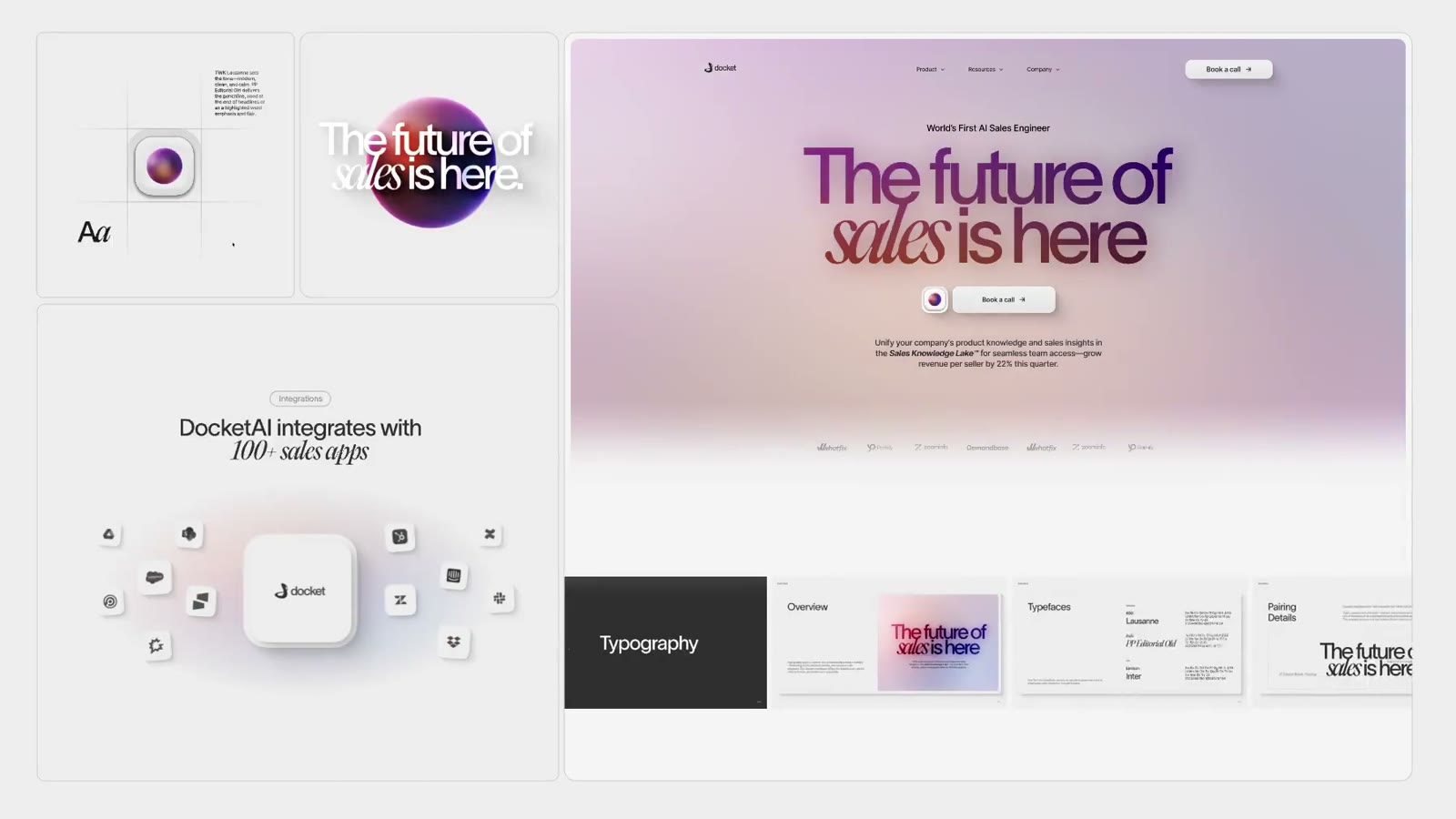
“We needed Docket to look like an AI company you'd trust, not another startup with a gradient and a promise. Raze got us there fast, stayed direct, and never let the project wander.”

Arun Lal, SVP of Marketing
Docket AI
“Edin and Mergim ran Emotive's marketing site for years. Not a one-off project, the actual site. It always looked a step ahead of where the company actually was, which is exactly what you want your website doing.”

Brian Zatulove, CEO
Emotive
“Raze rebuilt our site and it was the rare project where I never had to chase anyone. They understood the technical side, sweated the details, and shipped before I expected it.”

Ty Magnin, CEO
Animalz
The things every client asks us on the first call.
A B2B SaaS design agency works across the design problems specific to software companies: category positioning, brand identity, marketing websites, product UX/UI, conversion paths, and the systems used to keep shipping. Raze treats these as separate workstreams and chooses one primary outcome before scoping the engagement.
Choose brand work when the market does not understand or trust the company. Choose website work when qualified buyers are not reaching the next step. Choose product UX/UI when users struggle after they enter the product. If all three keep changing, an Embedded Partner engagement may fit better.
No. This page is the industry-level starting point for B2B software companies. The paid scope resolves into a Brand Sprint, Website Sprint, combined sprint, product design scope, or Embedded Partner engagement.
It can, but Raze still sets one primary workstream and sequence. Brand and website already have a combined four-week sprint. Product UX/UI or ongoing cross-discipline work is scoped separately so the engagement does not become an undefined list of design requests.
It is best for established B2B software teams with a real product, a multi-step buying journey, and uncertainty about whether brand, website, product experience, or design capacity is the main constraint.
Deliverables can include positioning, website pages, product storytelling, interface design, prototypes, and a reusable design system. The final list depends on whether the immediate problem sits in your brand, marketing site, product, or across all three.
Hire one when your product has moved ahead of the way it looks and explains itself. Common triggers include a new category, a funding round, weak demo conversion, inconsistent design, or a website that no longer supports the sales process.
Yes. We can extend an established system, work alongside your designers, or take ownership of a defined project. We agree on decision makers and review points early so your team gets useful involvement without turning every screen into a committee exercise.
Yes. We can work across the marketing site and selected product journeys when both shape the same customer experience. The scope may cover one surface or both, depending on where the biggest trust or usability problem sits.
Timing depends on the number of pages, product flows, and stakeholders involved. A focused sprint moves faster than a full brand, website, and product engagement. We define the deliverables and review schedule before work starts.